
Unpacking the Enigma of Japanese Streetwear
# Unpacking the Enigma of Japanese Streetwear
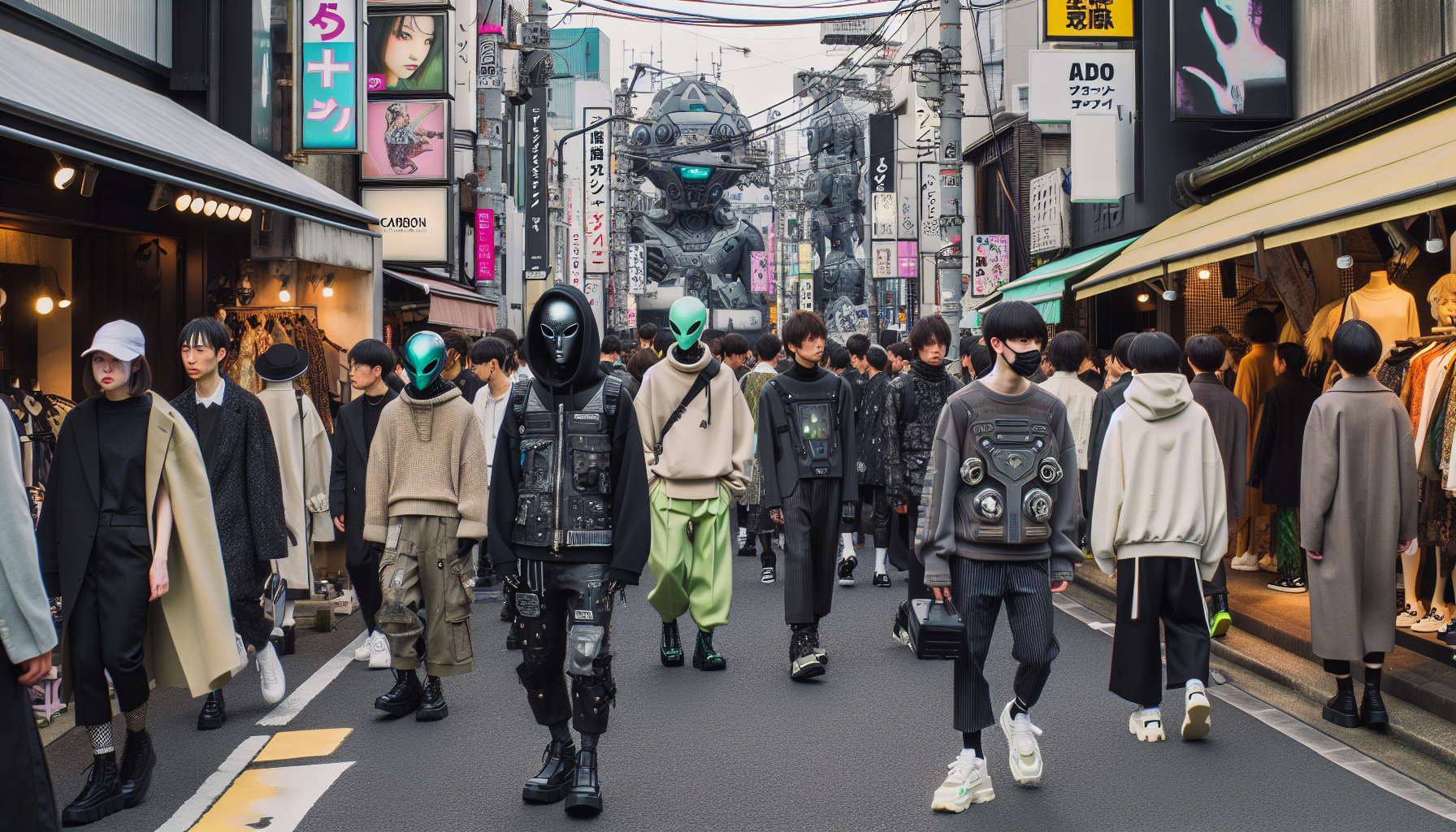
Picture this: You’re wandering through the streets of Harajuku, Tokyo, and it's like stepping into a world where fashion has its very own language. Outfits so eclectic, they make your head spin—oversized tees, bold graphics, and an explosion of color that rivals Times Square on New Year’s Eve. Japanese streetwear isn’t just about clothes; it’s a full-blown cultural phenomenon. But, why does it have such a magnetic pull? Let’s dive in and maybe get a little lost along the way...
The School of Conformity vs. University of Individuality
Japan's educational system is a well-oiled machine of routine and discipline. Middle school students are hustling like there's no tomorrow, cramming late into the night to ace high school exams. Sounds a bit intense, right? And with six-day school weeks, there's little room to cultivate personal style. Uniforms rule the day—unless you find yourself pinning the back of your jacket or tying your tie in a "cool" knot just to stand out a smidge. The pressure to conform is palpable.
But then comes university—a breath of fresh air, a gateway to creativity, and a time when students are finally free to explore who they are. It's no wonder Tokyo's street fashion often features university students, hungry for self-expression after years of uniformity. Plus, hairdressers and shop assistants, who can flaunt their sartorial flair at work, are often spotted in street style snaps.
Want to channel that free spirit? The Carbon XIV Japanese Landscape Alien Tee blends traditional motifs with a futuristic twist, perfect for those “I just want to be me” vibes.
SuperFlat Theory: Murakami’s Lens on Japanese Culture
Enter Takashi Murakami, the avant-garde artist who gave us the SuperFlat theory. It suggests that Japanese culture, especially from the 1990s onwards, is all image with no depth. Everything is about the visual spectacle—brands, logos, you name it. Japanese society, Murakami argues, is the ultimate consumer culture, with brands like Supreme using logos as design elements. It’s an art form where substance takes a backseat to style.
And this might answer a question lurking in your mind: How can people dress so boldly in a conservative society? It's because, in Japan, clothing isn’t tied to identity as it is in the West. Being a "punk" in New York might demand a lifestyle, but in Tokyo, it's purely for the aesthetic joyride. It’s all about the surface, baby.
Looking to make your own statement? The Carbon XIV Alien Logo Oversized T-Shirt gives you that out-of-this-world vibe without saying a word.
The Paradox of Tokyo Street Fashion
So, we’ve got two opposing trends here. On one hand, Tokyo street fashion rebels against the SuperFlat culture by embracing thrifted and layered pieces, playing with silhouettes and textures. It’s a fashion rebellion using minimal branding and a mix of high-low pieces. On the other hand, it fulfills the SuperFlat philosophy by being all about the image, not the meaning.
Brands like FACETASM and Undercover play into this beautifully. They create illusionary layers and mixed materials, offering outfits that appear deep and complex but are, at their core, all about the image—a simulacrum.
Want to play with this visual paradox? Try the Carbon XIV Samurai Geisha Alien Tee, which fuses tradition with modern aesthetics.
FAQs
Q1: Why is Japanese streetwear so different from Western fashion?
Q2: What are some key elements of Japanese streetwear?
Q3: How do brands like Supreme fit into Japanese streetwear?
Q4: Why are university students so prominent in street fashion photos?
SEO Metadata:
Shop the Collection
Pieces from Carbon XIV that define the culture.
Alien Signal Tee
 Sale
SaleCarbon XIV Oversized Graphic T-Shirt
 Sale
SaleCarbon XIV Japanese Landscape Alien oversized Graphic Tee: Where Tradition Meets Futurism
 Sale
Sale