
Tokyo Streetwear: Unmasking the SuperFlat Identity
# Tokyo Streetwear: Unmasking the SuperFlat Identity
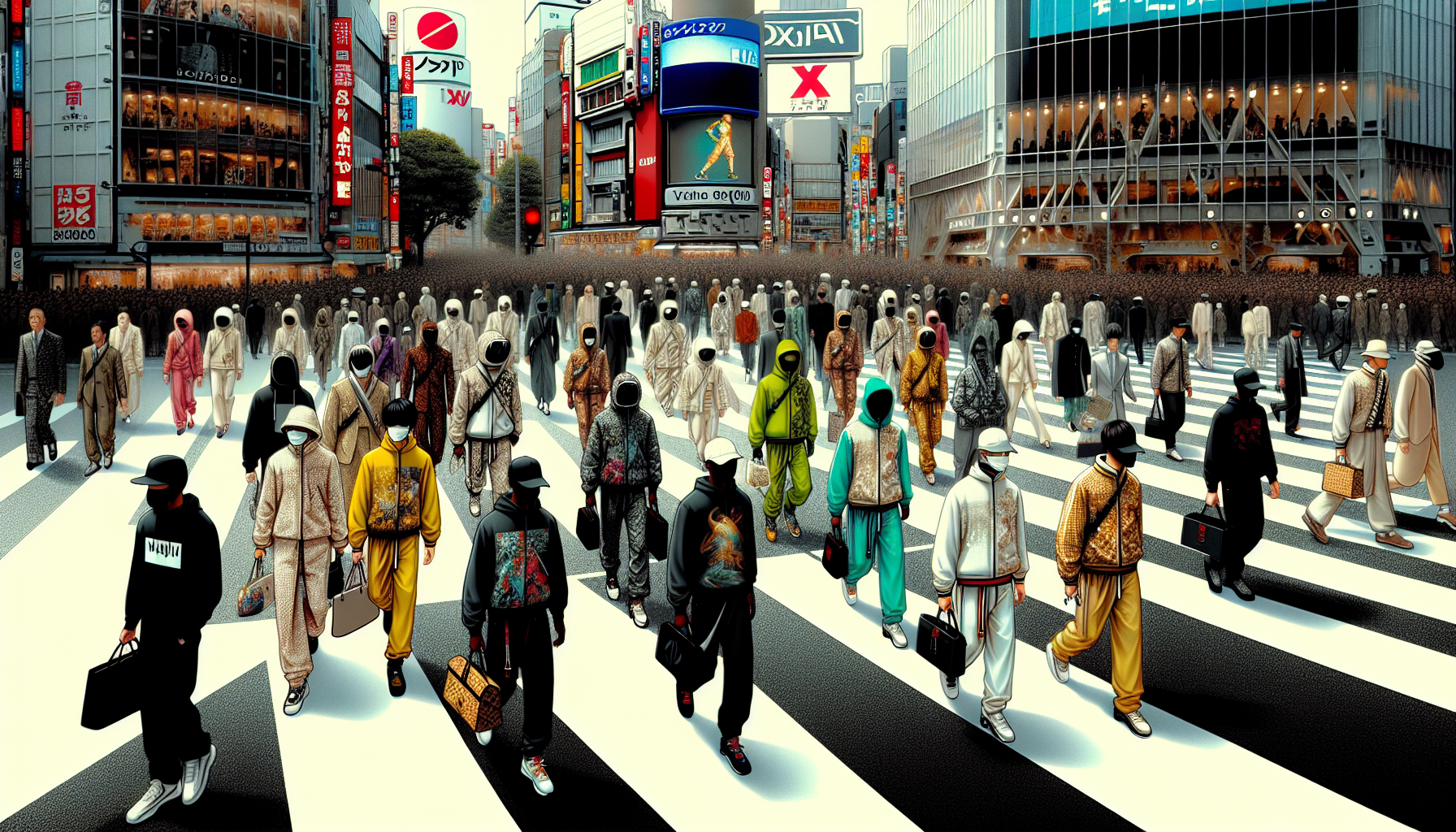
Picture this: a bustling Shibuya crossing, where every pedestrian is a moving canvas. Your eyes dart from one vibrant ensemble to another, each more daring than the last. Tokyo's street fashion scene is a kaleidoscope of creativity, self-expression, and, paradoxically, a nod to the notion of "SuperFlat," a theory coined by Japanese contemporary artist Takashi Murakami. But before you dismiss it as just another fashion trend, let me take you through the layers—or lack thereof—of what makes Japanese streetwear a culture of its own.
The Birth of Tokyo Streetwear
First, let's rewind a bit. Imagine being a teenager in Tokyo. School six days a week, cram classes at night, uniforms, and a rigid social hierarchy. Conformity is the name of the game, where fitting in means having the right LV wallet, a specific hairstyle, and a perfectly knotted tie. But then, university hits, and for the first time, there's freedom. Freedom to explore, to express, and to dare...
And that's when Tokyo's street fashion scene comes alive. University students, hairdressers, and shop assistants, liberated from dress codes, are the main subjects in street style photos. Their fashion isn't just clothes—it's rebellion against a highly structured system. Yet, ironically, it also embraces the SuperFlat concept Murakami described. Let's dive deeper, though honestly, we'll only scratch the surface.
SuperFlat: More Than Just Aesthetic
SuperFlat theory argues that since the '90s, Japanese culture has become all about the visual, lacking depth and obsessed with consumerism. In a society where logos can often be the sole design element, brands like Supreme have thrived. The logo becomes the identity. This might explain why Tokyo fashion appears both rebellious and superficial. It's both an anti-commercial statement and a commercial one. A style paradox, if you will.
Think of the Carbon XIV Oversized Graphic T-Shirt, where the logo and graphic essence are all you need to make an impression. It's all image, no deeper meaning required. Just like Murakami's art.
Layering and Silhouettes: The Streetwear Signature
When it comes to Tokyo street style, layers are king. Or rather, the illusion of layers is. Brands like FACETASM and Undercover use mixed materials to create the illusion of depth. It's all about the look, not the garment's actual complexity. Look at the Carbon XIV Japanese Landscape Alien Tee for that layered look without the weight. It's a conversation between tradition and the future, much like Tokyo fashion itself.
The silhouettes are equally intriguing. Loose fits, bold shapes, and unexpected combinations create ensembles that turn heads. The principle of one-upmanship is alive and well, with everyone aware that they might be captured on fashion blogs. It's a game—who can push the boundaries further?
The Role of Branding
In Western culture, wearing certain clothes might pigeonhole you into specific identity groups. Punks wear Dr. Martens and leather jackets, and it's about authenticity. In Japan, this connection between attire and identity isn't as strict. The clothes are purely aesthetic choices, not declarations of self. The Carbon XIV Samurai Geisha Alien Tee illustrates this—it's a fusion of traditional and modern without pegging you into one narrative.
The Fashion Personas of Tokyo
So, what drives someone to dress like they're a walking art piece? It's a mix of newfound freedom, cultural influences, and an inherent love for style experimentation. It's not about fitting in; it's about standing out... but also fitting into the aesthetic of Tokyo's streets.
Fashion is less about the brands (though let's not deny the allure of a good logo) and more about how these pieces are combined to create a personal statement. The Carbon XIV Samurai Cat T-Shirt is a perfect example of how traditional elements can be reimagined in playful, unexpected ways.
FAQ
Why is Japanese streetwear so popular globally?
Japanese streetwear resonates globally due to its unique blend of tradition and modernity, along with its rebellious spirit against consumer culture.
How does SuperFlat theory relate to fashion?
SuperFlat theory suggests a focus on the visual rather than deeper meaning, influencing fashion to prioritize image over substance.
What brands influence Tokyo's street fashion scene?
Brands like FACETASM, CDG, and Undercover are key players, known for their innovative use of layers and silhouettes.
How can I incorporate Tokyo streetwear into my style?
Start with bold, oversized pieces and experiment with layering and unique silhouettes, such as those seen in Carbon XIV's collection.
SEO Metadata
**
Shop the Collection
Pieces from Carbon XIV that define the culture.
Alien Signal Tee
 Sale
SaleCarbon XIV Oversized Graphic T-Shirt
 Sale
SaleCarbon XIV Japanese Landscape Alien oversized Graphic Tee: Where Tradition Meets Futurism
 Sale
Sale