
Edo to Meiji: How Japanese Fashion Design Got Its Groove Back
# Edo to Meiji: How Japanese Fashion Design Got Its Groove Back
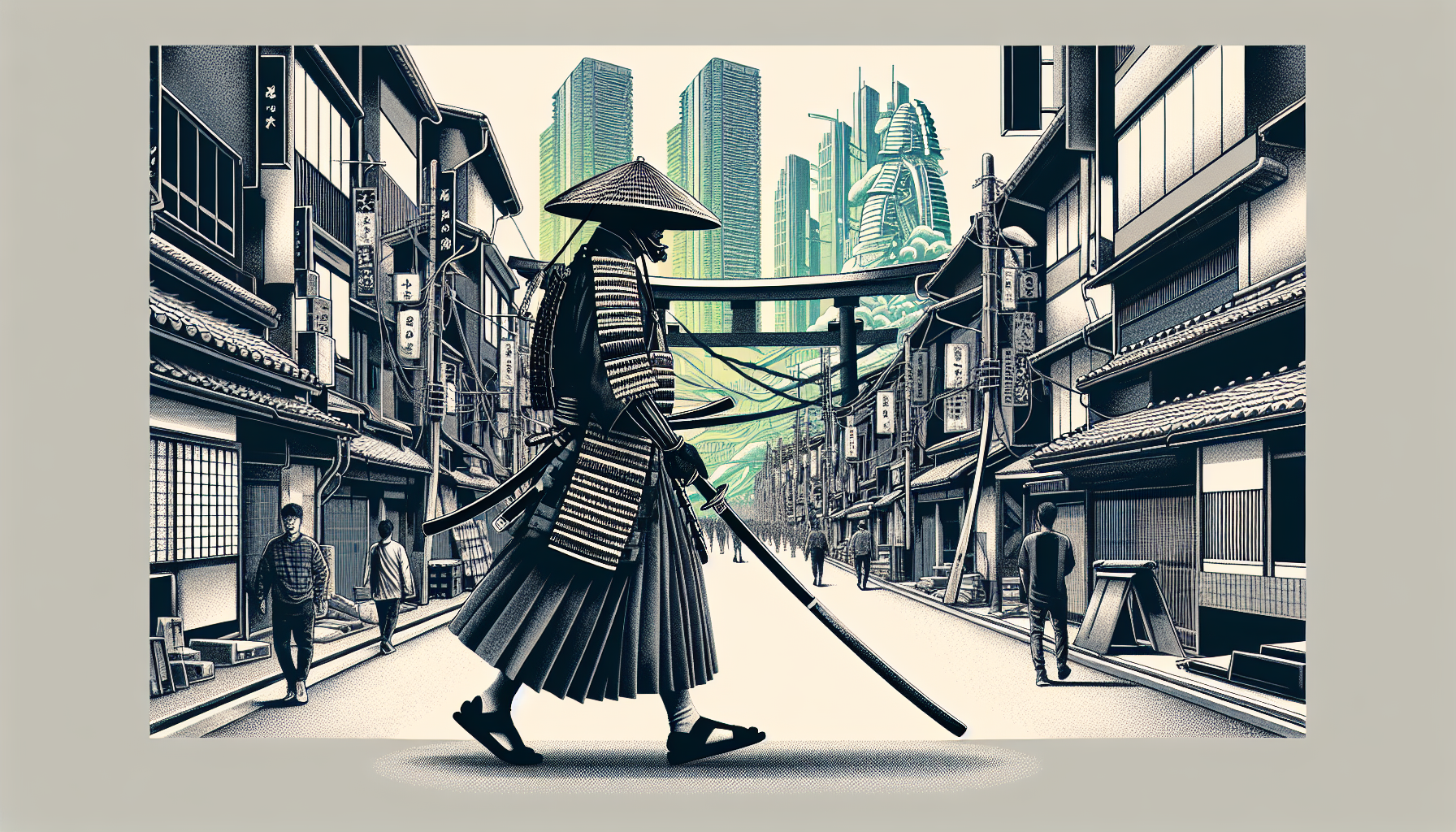
Picture this: you're strolling through Shibuya, neon lights flickering above, and you spot a modern-day samurai striding confidently down the street. His armor? A killer Carbon XIV Samurai Cat T-Shirt paired with a pair of limited edition kicks. This isn't just fashion, it's a statement—a nod to the vibrant history of Japanese clothing design, which flows all the way back to the Edo period and transitions smoothly into the Meiji era. Yeah, it’s that deep.
The Lush Tapestry of Edo Era Fashion
In the Edo period (1603-1868), Japan was like that cool kid in school who’s effortlessly stylish yet doesn’t try too hard. We’re talking about elaborate kimonos, luxurious silks, and motifs that told stories from folklore. Tailors were like artists, crafting each piece with an eye for detail and a love for tradition. You'd see geishas in flowing robes and samurai decked out in formidable attire that had both function and flair.
Speaking of which, our Carbon XIV Samurai Geisha Alien Tee catches that vibe—melding the past with a futuristic twist. It’s like wearing a piece of art that’s wandered straight off an Edo-era screen painting and into 2023.
The Great Shift: From Edo to Meiji
Then, bam—along came the Meiji Restoration in 1868, shaking things up like a seismic shockwave through the Gion district. Suddenly, Western influences were the new black. Out went the kimonos for some, and in came suits, bowler hats, and dresses that wouldn’t look out of place in a Charles Dickens novel. But here's the kicker: Japan didn’t just copy the West. It took these influences and remixed them into something uniquely its own.
Consider how today’s streetwear blends cultures and eras. Take the Carbon XIV Japanese Landscape Alien Tee. It’s the perfect example of how the past and future can coexist, with a nod to traditional Japanese art wrapped into a shirt that belongs in both Harajuku and a sci-fi film set.
The Modern Hybrid: Tradition Meets Futurism
Fast forward to now, and you’ll find Tokyo’s streets a playground for fashion rebels. From Harajuku girls flaunting their eclectic styles to salarymen donning refined suits, it’s a mosaic of the old and new, much like the iconic pieces found at Carbon XIV. The Carbon XIV Fearless Warrior T-Shirt embodies this spirit, featuring designs that reference the samurais of yore but feel fresh and bold.
It’s like TikTok’s Kai McKenzie (@kai.mckenzie_) says in his video on the Edo to Meiji transition—Japan has a knack for weaving its rich history into the cutting-edge tapestry of tomorrow’s fashion, creating a style that’s unmistakably its own. You can check out his take here.
FAQ
What defines Edo period fashion?
Edo period fashion is characterized by intricate kimonos, luxurious fabrics like silk, and motifs inspired by Japanese folklore.
How did the Meiji era influence Japanese fashion?
The Meiji era introduced Western styles like suits and dresses, which were then uniquely adapted to Japanese culture.
What is the modern impact of Edo and Meiji fashion on streetwear?
Today's streetwear blends these eras by merging traditional Japanese aesthetics with contemporary and futuristic designs, evident in brands like Carbon XIV.
How does Carbon XIV incorporate these historical elements?
Carbon XIV incorporates these elements by using traditional motifs and themes like samurais and geishas in modern, bold streetwear designs.
SEO Metadata
**
Shop the Collection
Pieces from Carbon XIV that define the culture.
Alien Signal Tee
 Sale
SaleCarbon XIV Oversized Graphic T-Shirt
 Sale
SaleCarbon XIV Japanese Landscape Alien oversized Graphic Tee: Where Tradition Meets Futurism
 Sale
Sale